
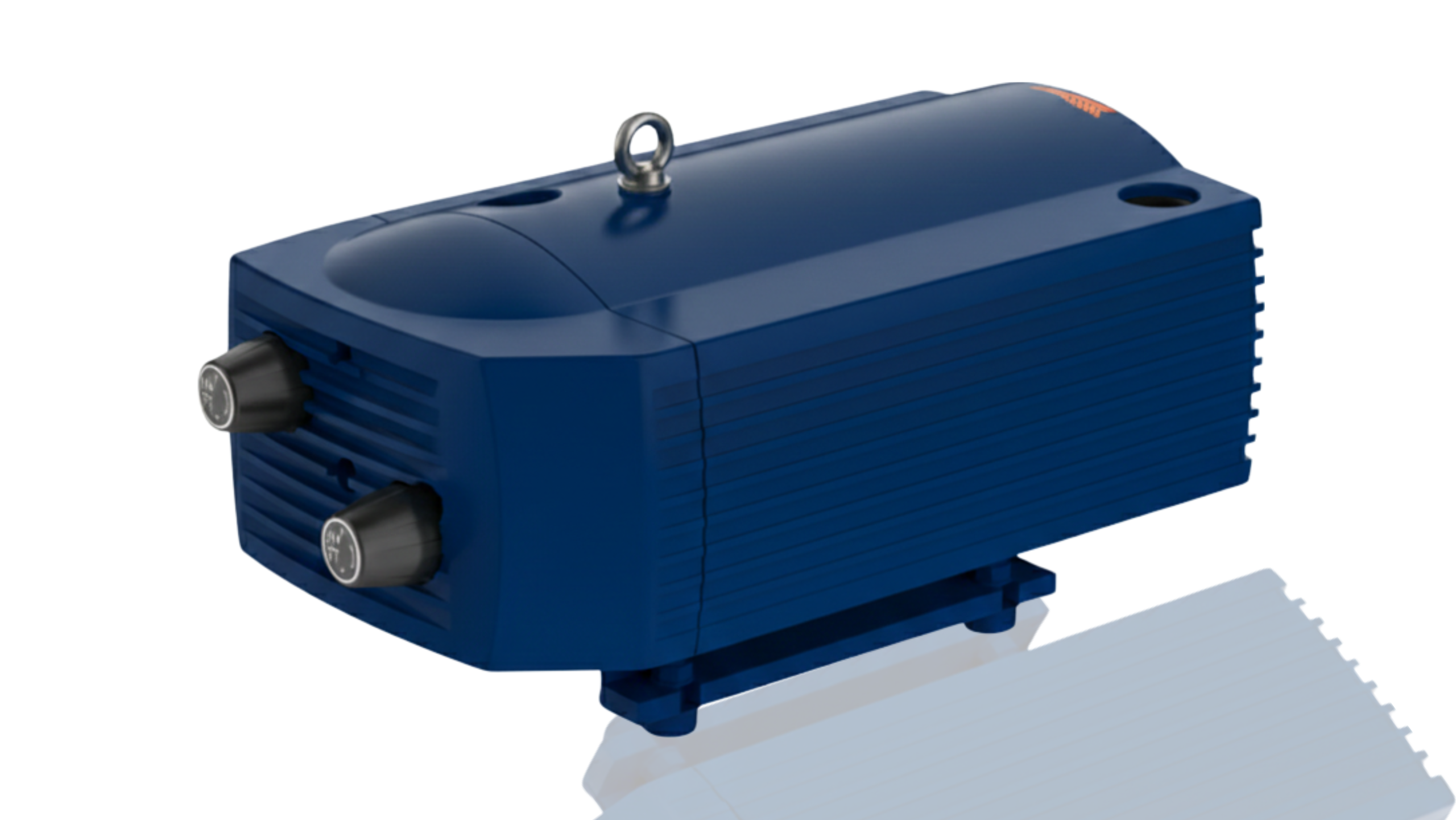
Rotary Vane Pumps are among the most widely used vacuum technologies across industries, but choosing the right pump for your application is essential to achieving reliable vacuum performance, efficient operation, and long service value.
Selecting a pump is more than simply choosing a high-capacity model. Many factors like vacuum level & pumping speed requirements, operating conditions, process demands, maintenance expectations, and future production goals play a role in determining which pump is best suited for your operation.
There are many vacuum technologies available today, but dry rotary vane pumps are a popular choice for industries seeking clean operation, lower routine maintenance requirements, and reliable vacuum generation.
However, it’s crucial to understand when a dry rotary vane pump is the right fit and when another vacuum technology may be more appropriate if you want to have long-term performance.
This guide explores the key considerations that can help you choose the right dry rotary vane pump for your industrial application.
Understanding Dry Rotary Vane Pumps
Before selecting a vacuum pump, it’s important to understand how dry rotary vane technology works.
Dry rotary vane pumps use a rotor fitted with sliding vanes that move within a pump housing to create vacuum. As the rotor turns, gas entering the pump is trapped between the vanes, compressed, and discharged through the exhaust port.
The major difference is that dry rotary vane pumps operate without oil in the compressed chamber when compared to oil-sealed rotary vane pumps. This provides oil-free vacuum generation and eliminates many of the maintenance requirements associated with oil-lubricated systems.
This operating principle makes dry rotary vane pumps well suited for clean, oil-free vacuum applications where moderate vacuum levels and simplified maintenance are important.
- Start with Your Vacuum Requirement
The first step in selecting a vacuum pump is understanding the vacuum level your process requires. It’s essential to understand that different applications demand different vacuum conditions.
For example:
- Packaging applications often require stable vacuum performance
- Printing and paper handling systems depend on consistent consistent vacuum level
- Material handling systems may require moderate vacuum levels
- Some laboratory and specialty processes may require deeper vacuum levels depending on the application.
While industrial rotary vane pumps are capable of supporting a wide range of applications, not every pump configuration is designed for every vacuum range.
Understanding your process vacuum requirement helps narrow down the most suitable solution.
- Evaluate the Nature of Your Process
Every industrial process has different operating conditions.
When selecting rotary vane vacuum pumps, ask:
- Will the pump handle clean air or process gases?
- Will dust or particles enter the system?
- Is moisture present in the process?
- Is continuous operation required?
- Does the application involve fluctuating demand?
- Are corrosive gases present?
- Are condensable vapors expected?
The answers to these questions will not only influence pump selection but also filtration requirements, maintenance planning, and overall system design.
For cleaner applications requiring contamination-free operation, dry rotary vane pumps are often preferred because they operate without oil in the compression chamber.
- Consider Operating Hours
One of the most important selection criteria is the number of hours the pump will operate each day. Most applications typically fall into three categories:
- Intermittent Operation
Processes that only require vacuum periodically may not demand heavy-duty equipment.
- Regular Industrial Operation
Many manufacturing processes operate throughout a standard production shift and require dependable vacuum performance.
- Continuous Operation
Facilities running multiple shifts or 24/7 operations require pumps designed for continuous industrial use.
When selecting industrial rotary vane pumps, always double-check that your selected pump is rated for your expected operating cycle. A properly sized pump will provide better reliability and longer service life.
- Determine Capacity Requirements
Vacuum level is only one part of the equation. The selected pump should provide adequate pumping speed at the required operating vacuum.
Undersized dry rotary vane pumps can result in:
- Slow evacuation times
- Inconsistent vacuum performance
- Reduced productivity
- Increased equipment strain
Oversized pumps may lead to:
- Increased operating costs
- Higher energy consumption
- Unnecessary capital expenditure
When you work with experienced rotary vane pump manufacturers, they help you understand all the factors and ensure that you install a correctly sized vacuum system based on your actual process requirements rather than assumptions.
Understand the Different Rotary Vane Pump Options
Not all rotary vane pumps are designed for the same applications.
- Dry Rotary Vane Pumps
Dry rotary vane pumps are ideal when your priorities are clean operation and simplified maintenance because there is no lubricating oil in the compression chamber.
The key benefits include:
- Oil-free compression chamber
- Clean vacuum generation
- Reduced maintenance requirements
- Simplified servicing
Dry rotary vane pumps are commonly used in packaging, printing, automation, and material handling applications.
- Oil-Sealed Rotary Vane Pumps
Oil-sealed rotary vane pumps use oil for sealing, lubrication, and cooling.
They are often installed when applications require:
- Enhanced vacuum stability
- Deeper vacuum levels
- High-performance industrial operation
Oil-sealed systems may require more routine maintenance but are highly effective for demanding vacuum processes.
- Double Stage Rotary Vane Pumps
Applications that require lower ultimate pressure performance should go with double-stage rotary vane pumps as they can provide improved vacuum capability compared to single-stage designs.
These pumps are often used in:
- Degassing processes
- Vacuum drying
- Laboratory applications
- Specialized industrial operations
Selecting between dry, oil-sealed, and double-stage designs depends entirely on process requirements.
Evaluate Maintenance Expectations
Maintenance requirements vary significantly between vacuum technologies.
If your goal is to minimize routine servicing, then dry rotary vane technology can provide advantages because it eliminates oil changes associated with oil-lubricated systems.
When comparing vacuum vane pumps, consider:
- Downtime impact
- Replacement part availability
- Service intervals
- Maintenance labor requirements
- Vane Inspection
- Filter Replacement
Lower maintenance requirements often contribute to improved operational efficiency and reduced lifecycle costs.
Consider Future Expansion Plans
Most industries often make the mistake of selecting equipment based solely on current requirements.
But as reliable rotary vane pump manufacturers, we suggest that future expansion should also be considered.
Think about:
- Will production volumes increase?
- Will vacuum demand change over time?
- Are additional machines planned?
- Is automation expansion expected?
Selecting a dry rotary vane pump with future scalability in mind can help avoid costly upgrades later.
Final Thoughts
Selecting the right dry rotary vane pump requires a clear understanding of your process requirements, operating conditions, vacuum levels, and future production goals.
Whether you’re comparing oil-sealed rotary vane pumps, double-stage rotary vane pumps, or other industrial rotary vane pumps, choosing the right solution can support reliable process performance, reduce maintenance costs, and ensure dependable vacuum performance for years to come.